As creators move from selling simple downloads to teaching structured material, the question usually changes.
Instead of “how do I sell this file?”, it becomes “how do I deliver learning properly?”
That is where platforms like Thinkific come into the picture.
Thinkific is often described as an online course platform, but that description alone misses the bigger picture. The real value of Thinkific is not just hosting videos, but structuring education.
Let’s look at what Thinkific actually does, who it is best for, and when it makes sense compared to other tools.
What Is Thinkific?
Thinkific is a platform designed for creating, hosting, and selling online courses and educational programs.
It provides everything needed to deliver learning content in an organized way, including:
- Course creation and lesson structure
- Video and content hosting
- Student management
- Progress tracking
- Payments and access control
- Certificates and assessments (depending on plan)
Thinkific focuses on teaching experiences, not just transactions.
Who Is Thinkific For?
Thinkific works best for people who want to teach something in a structured, repeatable way.
It is a good fit if you:
- Want to create full online courses
- Care about learning flow and student progress
- Teach skills, frameworks, or processes
- Want a professional learning environment
- Plan to reuse and improve content over time
Thinkific is commonly used by:
- Educators and coaches
- Consultants and trainers
- Content creators expanding into courses
- Businesses offering internal or customer education
If your product is knowledge based and benefits from structure, Thinkific makes sense.
How Thinkific Is Typically Used
Thinkific is usually the home for learning, not the entire business.
Common setups include:
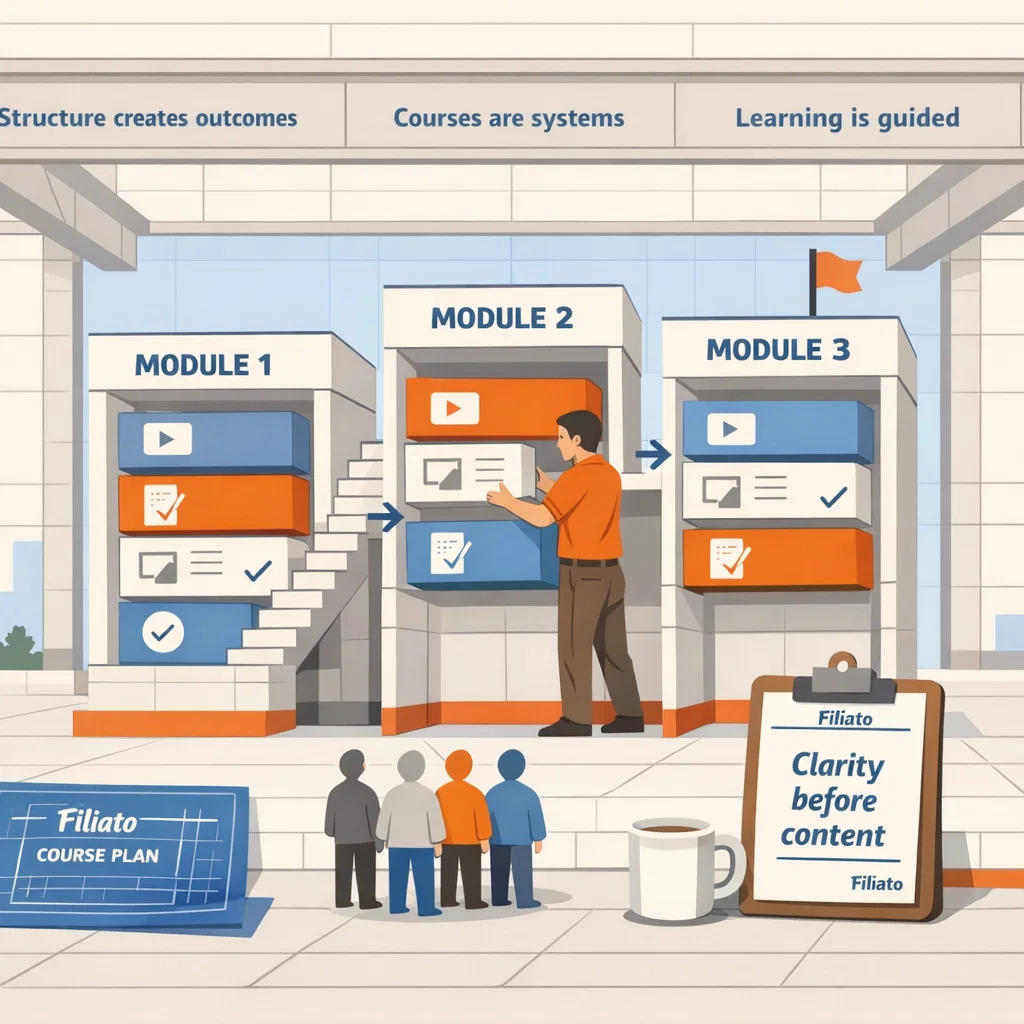
- A main course with multiple modules and lessons
- Cohort based or evergreen courses
- Upsells or additional courses
- Certificates upon completion
- Integration with external marketing tools
Traffic is often driven from:
- Blogs
- YouTube
- Email lists
- Communities like Skool
Thinkific focuses on delivery, not discovery.
Pros of Thinkific
Thinkific has several strong advantages for course creators.
Structured learning experience
Lessons, modules, and progress tracking are built for education, not just content hosting.
Reliable and professional
The platform is stable and trusted by many educators and businesses.
No technical setup
Hosting, security, and video delivery are handled for you.
Flexible course design
You can drip content, lock lessons, and guide students step by step.
Scales well for education
Thinkific handles growing student numbers without major complexity.
Cons of Thinkific
Thinkific is not the right tool for every stage or use case.
Limited marketing tools
Compared to all in one platforms, marketing and funnel features are basic.
Customization has limits
Design flexibility exists, but deep customization often requires workarounds.
Pricing can feel high early on
For beginners, cost may feel significant before revenue is consistent.
Not a community first platform
Community features exist, but they are not the platform’s core strength.
Thinkific shines as a classroom, not a social space.
Thinkific vs Other Platforms
Context matters when choosing Thinkific.
Thinkific vs Gumroad or Payhip
Gumroad and Payhip are better for simple product sales. Thinkific is better for structured education.
Thinkific vs Systeme.io
Systeme.io is more marketing driven. Thinkific is more learning driven.
Thinkific vs Kajabi
Kajabi offers more marketing tools. Thinkific offers a cleaner, education focused experience.
Thinkific vs Skool
Skool blends community and learning. Thinkific prioritizes curriculum and progression.
Each tool solves a different problem.
Should You Use Thinkific?
Thinkific makes sense if:
- Teaching is your main product
- You want structured, high quality learning
- You value clarity over funnels
- You plan to reuse content long term
It is less ideal if:
- You want fast experimentation
- Community is your main value
- You need heavy marketing automation
- You are still testing ideas
Courses work best when they are built deliberately.
A Thought Before Building a Course
A platform will not fix unclear teaching.
Before choosing Thinkific, it helps to be clear on:
- What transformation your course delivers
- Who it is designed for
- How success is measured for students
- How support and updates will work
Tools amplify intention. They do not create it.
Want Help Structuring Learning the Right Way?
Inside the Filiato community, we focus on foundations before platforms. That includes deciding whether a course even makes sense, how to structure it, and when to layer in tools like Thinkific.
If you want to build educational products calmly and intentionally, you can join the community and start with clarity instead of complexity.