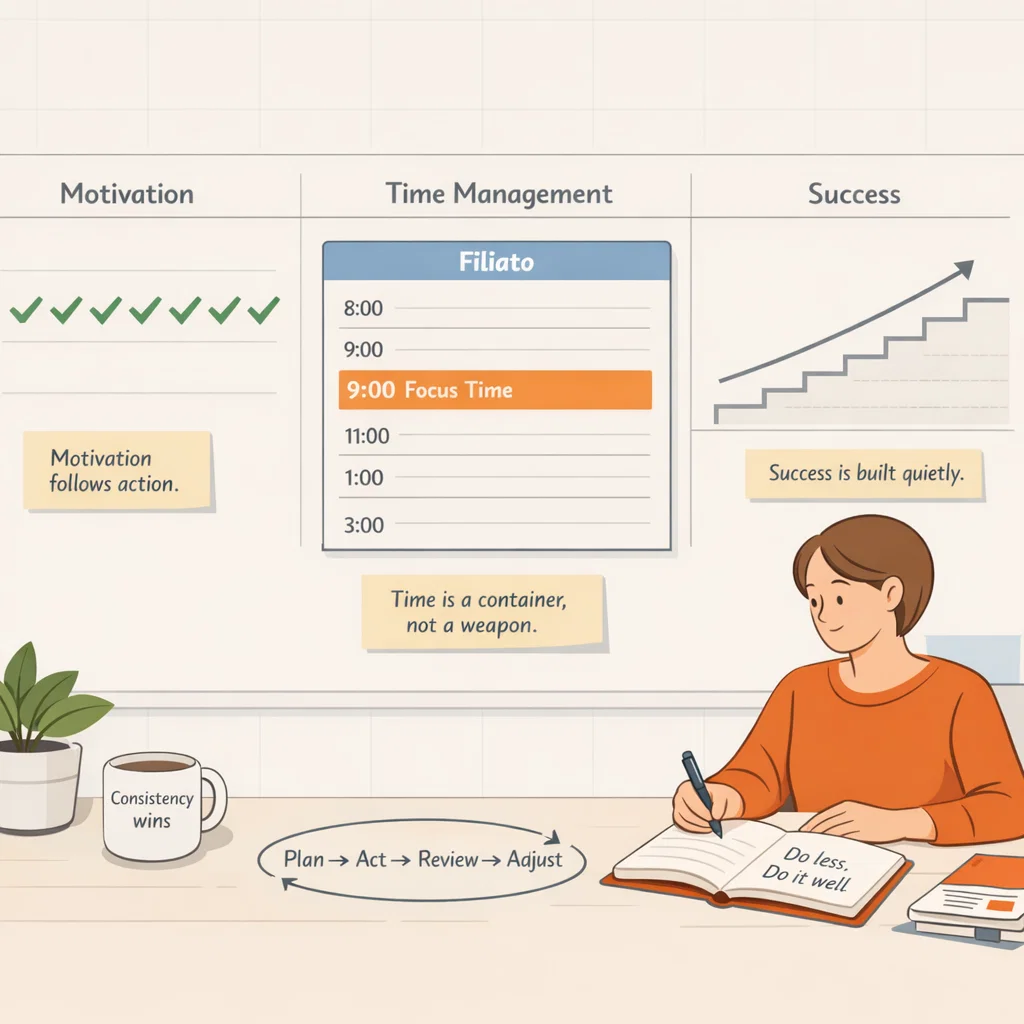
Success is rarely about luck or talent alone. Behind every high performer lies a powerful combination of motivation, time management, and consistent action. When these three elements work together, progress becomes predictable and sustainable.
In this article, we’ll break down how motivation fuels action, how time management creates clarity, and how both directly impact long-term success.
Why Motivation Is the Starting Point of Success
Motivation is the internal drive that pushes you to start and continue working toward your goals. Without it, even the best plans fall apart.
Types of Motivation That Matter
- Intrinsic motivation: Driven by purpose, passion, and personal growth
- Extrinsic motivation: Driven by rewards, recognition, or external results
The most successful people combine both. Purpose keeps you moving when things get hard, while rewards reinforce consistency.
Key insight: Motivation doesn’t come after action it grows because of action. Starting small creates momentum.
Time Management: The Skill That Turns Effort Into Results
Being busy is not the same as being productive. Time management is about prioritizing what truly matters and eliminating distractions that drain energy.
Effective Time Management Strategies
- Plan your day the night before
- Focus on high-impact tasks first
- Use time blocks to reduce context switching
- Set clear boundaries for work and rest
When you manage your time intentionally, you stop reacting to life and start directing it.
Result: Less stress, better focus, and faster progress toward your goals.
How Motivation and Time Management Work Together
Motivation gives you the desire to act, while time management gives you the structure to execute.
Without motivation, schedules feel restrictive.
Without time management, motivation gets wasted.
When aligned, they create:
- Consistent daily habits
- Measurable progress
- Higher confidence and discipline
This alignment is where success becomes inevitable.
Defining Success on Your Own Terms
Success looks different for everyone career growth, financial freedom, personal fulfillment, or balance. What matters is clarity.
Ask yourself:
- What does success mean to me right now?
- Which daily actions move me closer to it?
- What am I willing to sacrifice and what am I not?
Clear goals simplify decisions, sharpen motivation, and make time management effortless.
Practical Steps to Apply Today
- Write down one meaningful goal
- Break it into weekly and daily actions
- Block time for those actions—no exceptions
- Track progress, not perfection
- Adjust, refine, and repeat
Small, intentional steps taken consistently outperform bursts of motivation every time.