Understanding what competitors are doing is an important part of building an effective advertising strategy. Businesses need to know which offers are appearing in their market, what messages competitors are using and how frequently new campaigns are being launched.
The problem is that competitor research can quickly become a time consuming process.
A marketer may need to search the Meta Ad Library, Google Ads Transparency Center, TikTok Ads Library and LinkedIn Ad Library separately. They then need to save advertisements, organize screenshots, compare campaigns and identify what has changed.
Rival Ads is designed to simplify this process.
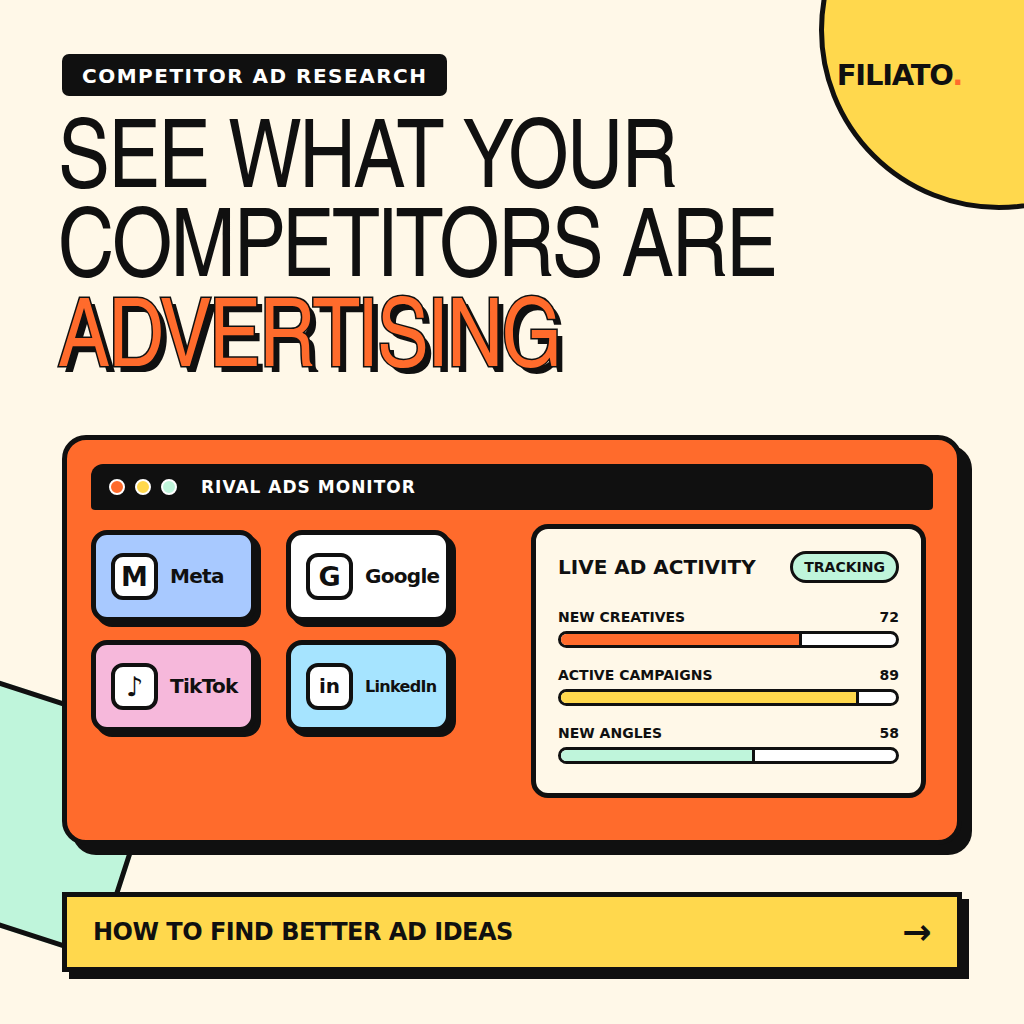
The platform monitors competitor advertisements across multiple advertising channels and organizes the information inside one dashboard. Instead of repeatedly checking different public ad libraries, marketers can create competitor monitors and receive updates when advertising activity changes.
This makes Rival Ads useful as a research and monitoring platform. It does not create a complete marketing strategy automatically, but it can provide the evidence needed to make better informed advertising decisions.
In this guide, we will explore what Rival Ads is, who it is designed for and how businesses, freelancers and marketing agencies can use it effectively.
What Is Rival Ads?
Rival Ads is a competitor advertising tracking platform that monitors advertisements across Meta, Google, TikTok and LinkedIn.
Meta includes advertisements running across Facebook and Instagram.
The platform collects publicly available advertising information and organizes it into individual competitor monitors and client projects. Users can view the creatives, copy, links and other available information connected to the advertisements being tracked.
One of its most useful functions is its ability to identify changes over time.
Rival Ads can show which competitor advertisements have recently started, which ones have stopped running and which ones have continued to appear. This provides more context than looking at a competitor’s active ads on a single day.
For example, imagine that a competitor launches ten new video advertisements.
After several weeks, eight of the videos are no longer active, but two continue running. This does not prove that the remaining advertisements are profitable. Advertisers can continue running ineffective campaigns for many reasons. However, the longer running advertisements may deserve closer examination because the competitor has chosen to keep them active.
Rival Ads also includes advertising intelligence features that can analyze elements such as:
- Advertising hooks
- Creative formats
- Messaging angles
- Intended audiences
- Offers and calls to action
- Changes in campaign direction
- Video transcripts and text appearing inside creatives
The platform can then organize this information into reports and strategic summaries.
How Rival Ads Works
The basic workflow is relatively simple.
First, the user adds a competitor or enters the competitor’s website. Rival Ads attempts to identify the company’s presence across supported advertising platforms.
The user can then select the advertising channels that should be monitored.
Once a monitor has been created, Rival Ads checks the relevant public ad library at intervals determined by the user’s plan. It collects the available advertisements and saves the creative material, advertising copy and related information.
During later checks, the platform compares the newly available advertising information with the previous collection.
This comparison can identify three important categories:
Started advertisements
These are new advertisements that have appeared since the previous check. They can indicate that the competitor is testing a new offer, message, format, product or audience.
Stopped advertisements
These are advertisements that are no longer active or visible. They may represent completed promotions, seasonal campaigns or ideas that the competitor decided not to continue.
Continued advertisements
These are advertisements that remain active across multiple checks. They may help marketers identify themes and messages that competitors continue to support.
Users can organize monitors into projects, save interesting advertisements to a swipe file and generate reports for internal teams or clients.
Who Is Rival Ads For?
Rival Ads can be useful for several types of professionals and businesses.
Marketing agencies
Marketing agencies often manage advertising campaigns for multiple clients. Each client may also have several important competitors.
Manually researching every competitor can require a significant amount of time. An agency employee may need to collect screenshots, compare campaigns and create a report before presenting any useful conclusions.
Rival Ads can centralize this process. Agencies can organize monitors by client, allow team members to access specific projects and generate shareable reports.
Its white label functionality may be especially relevant for agencies. Depending on the selected plan, an agency may be able to apply its own logo, colors and domain to dashboards and reports.
This makes it possible to present competitor advertising intelligence as part of the agency’s own service.
Freelance marketers
Freelancers can use competitor advertising data when creating campaign plans, advertising copy or creative briefs.
Before writing a new advertisement, a freelancer can examine the market to understand which problems, benefits and offers are already being promoted.
This research can help the freelancer avoid creating generic campaigns that look identical to everything else in the market.
Paid advertising specialists
Media buyers and paid advertising specialists can use Rival Ads to monitor how quickly competitors launch and replace their advertisements.
They can compare the use of video, static images, testimonials, demonstrations and promotional offers. They can also save relevant examples for future creative planning sessions.
Ecommerce businesses
Ecommerce brands operate in highly competitive advertising environments. Products, discounts and creative styles can change quickly.
Rival Ads can help an ecommerce team monitor product launches, seasonal promotions, bundles, free shipping offers and different forms of social proof.
Software and SaaS companies
Software companies can monitor how competing products explain their features and position their offers.
This may reveal whether competitors are focusing on price, convenience, automation, productivity, cost reduction or a particular customer segment.
Consultants and business strategists
Consultants can use competitor advertising information when preparing market research, positioning recommendations and customer acquisition strategies.
The reports can support a broader analysis that also includes competitor websites, customer reviews, organic content, pricing and search visibility.
Small business owners
Small business owners may not have a dedicated research team. A monitoring platform can help them follow important competitors without spending hours searching through multiple advertising libraries.
However, the business owner still needs to interpret the information carefully and decide whether it is relevant to the company’s own audience.
Who Can Benefit Most From Rival Ads?
Although many businesses can use competitor monitoring, some situations make the platform particularly valuable.
Businesses operating in advertising heavy markets
If competitors are constantly running paid campaigns, the available data can provide useful information about current market activity.
Examples include ecommerce, online education, software, fitness, beauty, financial services and digital marketing.
Agencies managing several clients
The time saving potential becomes greater when an agency needs to monitor competitors for several accounts.
A standardized monitoring and reporting process can also make the agency’s services easier to deliver consistently.
Businesses planning to increase advertising spending
Before investing more money into advertising, a company can use competitor research to understand the existing creative landscape.
The objective is not to copy competitors. The objective is to identify common patterns, missing angles and opportunities for differentiation.
Teams that need regular competitor reports
Some businesses conduct competitor research once and then fail to update it.
Rival Ads can turn research into a recurring process. Alerts, scheduled checks and reports can help teams notice changes without restarting the entire research process every month.
Freelancers looking to offer a new service
Freelancers can use Rival Ads as part of a competitor advertising analysis service.
Instead of only selling advertising management, a freelancer could offer monthly competitor monitoring, creative research or strategic campaign reports.
How to Use Rival Ads Effectively
Simply collecting advertisements is not enough. The value comes from turning the collected information into useful observations and actions.
Here is a practical Rival Ads workflow.
Step 1: Select the Right Competitors
Start with three to five relevant competitors.
Avoid selecting companies only because they are large or popular. The most useful competitors usually target a similar audience, solve a similar problem or sell a comparable product.
A good competitor list might include:
- A direct competitor selling a similar product
- A larger market leader
- A newer company growing quickly
- A competitor using a different pricing model
- A company targeting the same audience with a different solution
This combination can provide a broader picture of the market.
Step 2: Monitor the Most Relevant Platforms
Not every advertising platform will be equally important for every business.
An ecommerce brand may find Meta and TikTok particularly useful because these platforms contain a large amount of visual and video advertising.
A business to business software company may pay more attention to Google and LinkedIn.
Choose platforms based on where the target audience is most likely to discover, evaluate and purchase the product.
It is also important to understand how Rival Ads counts monitors. According to the current AppSumo information, one competitor on one advertising platform counts as one monitor. Tracking the same company on Meta and Google would therefore use two monitors.
Step 3: Establish a Baseline
Allow Rival Ads to collect the current advertisements for each competitor.
During the initial review, record the dominant patterns.
Questions to consider include:
- Which products are being promoted most often?
- What problems do the advertisements mention?
- Which benefits appear repeatedly?
- What types of creative formats are used?
- Are the advertisements focused on discounts or long term value?
- What calls to action are common?
- Which customer groups are being addressed?
This baseline will make future campaign changes easier to recognize.
Step 4: Study New Advertising Tests
When a competitor launches new advertisements, look for meaningful changes.
A new creative can be more than a simple design update. It may represent a new offer, audience, message or positioning strategy.
For example, a software company that previously focused on saving time may begin advertising its reporting capabilities. This could indicate that the company is trying to attract managers or larger organizations.
One advertisement is rarely enough to support a conclusion. Look for repeated patterns across several creatives and over a longer period.
Step 5: Examine Long Running Advertisements
Advertisements that continue appearing across multiple monitoring periods can be valuable research material.
Study their structure carefully.
Review the opening hook, main problem, promised benefit, visual style, proof, offer and call to action.
Long running advertisements should be treated as indicators rather than guaranteed winners. Rival Ads does not have access to a competitor’s complete advertising costs, conversion rates or profitability unless that information has been made public elsewhere.
Step 6: Save Useful Examples
Use the swipe file to organize advertisements by theme.
Possible categories include:
- Strong hooks
- Product demonstrations
- Testimonials
- Before and after concepts
- Promotional offers
- Educational advertisements
- Objection handling
- Social proof
- Seasonal campaigns
The swipe file should be used for inspiration and research. Copying another company’s creative, branding or advertising text can create legal, ethical and strategic problems.
Step 7: Convert Research Into Original Ideas
The next step is to turn the observations into an original campaign.
Suppose several competitors focus on low prices, but very few discuss customer support. A company with excellent support could use this as a positioning opportunity.
If every competitor uses polished studio videos, a more personal founder led video might stand out.
If most advertisements target experienced customers, there may be an opportunity to create educational campaigns for beginners.
The objective is to identify what the market is doing and then decide where the business can offer something clearer, stronger or different.
Step 8: Create a Regular Review Process
Competitor research is most useful when performed consistently.
A marketing team could conduct a short weekly review and a deeper monthly analysis.
The weekly review might include:
- New advertisements launched
- Advertisements that stopped running
- New offers or promotions
- Interesting hooks and creative formats
The monthly analysis might include:
- Changes in competitor messaging
- Common creative patterns
- Long running campaigns
- Emerging audience segments
- Ideas for future advertising tests
This creates a repeatable competitor intelligence process rather than a collection of disconnected screenshots.
Practical Examples of How to Use Rival Ads
Here are several ways different businesses and professionals could apply Rival Ads.
Example 1: Ecommerce Skincare Brand
A skincare company tracks five competitors across Meta and TikTok.
The team notices that several competitors are running short demonstration videos focused on simple morning routines. Advertisements featuring complicated routines tend to disappear more quickly.
The company should not copy the videos. Instead, it can test its own simplified routine using its products, brand identity and customer research.
The insight is the customer preference for simplicity, not the specific creative execution.
Example 2: SaaS Company
A project management software company monitors competitors across Google and LinkedIn.
The team discovers that competitors are increasingly focusing on reducing meetings rather than simply organizing tasks.
This can encourage the company to investigate whether meeting reduction is also an important problem for its customers.
If customer interviews confirm the demand, the company could develop an original campaign showing how its product reduces unnecessary status meetings.
Example 3: Marketing Agency
A marketing agency creates a Rival Ads project for each client and monitors several competitors.
Every month, the agency prepares a report containing:
- Important competitor campaign changes
- New advertising hooks
- Common offers
- Long running creatives
- Recommended tests for the next month
The agency can include this report in its existing advertising management package or sell it as a separate competitor intelligence service.
Example 4: Freelancer Offering Competitor Reports
A freelance marketer approaches local ecommerce brands and offers a monthly competitor advertising report.
The service could include monitoring, a summary of important changes and three original campaign recommendations.
Rival Ads provides the underlying monitoring and organization, while the freelancer provides the interpretation, business context and recommendations.
The value of the service comes from the freelancer’s judgment rather than simply forwarding automated information.
Example 5: Online Course Creator
A course creator monitors other companies advertising educational products in the same market.
The creator studies how competitors address common objections such as lack of time, lack of experience or fear of wasting money.
This information can help the creator improve original advertising messages, landing pages and webinar topics.
Example 6: New Client Acquisition for an Agency
An agency can create a short competitor advertising analysis before approaching a potential client.
For example, the agency may identify that the company’s competitors are actively testing video testimonials while the potential client is relying only on static product images.
The agency can use this observation to start a relevant conversation.
A possible outreach message might explain that competitors are increasing their use of customer focused video creatives and offer to share several original campaign ideas.
This approach is more useful than sending a generic sales message because it is connected to visible activity in the prospect’s market.
Using Rival Ads as a White Label Service
One of the more interesting uses of Rival Ads is the possibility of building a branded competitor monitoring service.
Agencies may be able to apply their own logo, colors and custom domain to the client experience, depending on the selected plan and current offer terms.
A white label service could include:
- Continuous competitor advertising monitoring
- Monthly strategy reports
- Advertising trend summaries
- Creative swipe files
- Campaign planning sessions
- Alerts when major competitors launch new promotions
This service could be offered as part of a larger marketing package or as a standalone monthly subscription.
Agencies should avoid presenting automatically generated observations as guaranteed conclusions. Reports should explain what was observed, why it may matter and what should be tested next.
Common Mistakes to Avoid
Copying competitor advertisements
Competitor research should generate insight, not imitation.
Use the data to understand themes and opportunities, then create original campaigns that match the company’s own brand and customers.
Assuming a long running ad is profitable
An advertisement that remains active may be performing well, but its duration alone does not prove profitability.
Treat longevity as a research signal.
Monitoring too many irrelevant competitors
More data does not always create more clarity.
A smaller group of relevant competitors is often more useful than a large collection of unrelated brands.
Ignoring the landing page
The advertisement is only one part of the customer journey.
When possible, examine the destination page, offer, pricing, proof and call to action connected to the advertisement.
Collecting information without taking action
A large swipe file has little value if the information never influences a campaign.
Every research session should end with one or more ideas that can be investigated, prioritized or tested.
Is Rival Ads a Replacement for Marketing Research?
Rival Ads should be treated as one part of a broader research process.
It can show what competitors are advertising publicly. It cannot reveal their complete advertising budgets, accurate profitability, internal strategy or customer satisfaction.
A complete market analysis should also consider:
- Customer interviews
- Product reviews
- Search demand
- Competitor pricing
- Website positioning
- Organic social media content
- Email marketing
- Customer support experiences
- The company’s own campaign performance
Rival Ads can make the competitor advertising portion of this research easier to manage.
Final Thoughts
Rival Ads provides a centralized way to monitor competitor advertisements across Meta, Google, TikTok and LinkedIn.
Its most important benefit is not simply access to advertising creatives. Public advertising libraries already provide much of that information.
The real benefit is organization and continuity.
Rival Ads can collect advertisements, compare activity over time, identify changes and help teams turn scattered competitor information into a repeatable research process.
Marketing agencies can use it to improve client reporting or develop a white label competitor monitoring service. Ecommerce brands can use it to follow creative trends. Software companies can analyze positioning changes. Freelancers can use it to create more informed campaign recommendations.
The platform should not be used to copy competitors or assume that every long running advertisement is successful. It should be used to ask better questions, identify patterns and develop original ideas that can be tested with real customers.
To explore the current Rival Ads offer, features and available plans, use the link below.
Frequently Asked Questions About Rival Ads
Which advertising platforms does Rival Ads support?
Rival Ads currently monitors competitor advertisements across Meta, Google, TikTok and LinkedIn. Meta includes Facebook and Instagram advertising.
Do I need access to my competitors’ advertising accounts?
No. Rival Ads works with information available through public advertising libraries. You do not need access to a competitor’s private advertising account.
Can Rival Ads tell me exactly how much a competitor is spending?
Rival Ads can help users observe advertising activity, creative duration and campaign changes. It does not provide a complete view of a competitor’s private advertising budget or profitability.
Can marketing agencies use their own branding?
Rival Ads offers white label functionality that may allow agencies to use their own logo, colors, reports and custom domain. Availability can depend on the selected plan, so buyers should verify the current terms before purchasing.
Can Rival Ads create advertising ideas?
The platform can analyze advertising hooks, angles, audiences and creative patterns. These observations can support campaign ideation, but businesses should combine them with customer research and their own marketing judgment.
Is it acceptable to copy competitor advertisements?
No. Competitor advertisements should be used for research and inspiration. Businesses should create original copy, visuals, offers and positioning that reflect their own products and customers.
How often should competitor advertising be reviewed?
A short weekly review and a more detailed monthly analysis can work well for active advertising markets. The most appropriate schedule depends on how frequently competitors launch new campaigns.
Can freelancers make money using Rival Ads?
A freelancer could use Rival Ads as part of a paid competitor research, creative analysis or monthly advertising intelligence service. Clients should be paying for useful interpretation and recommendations, not only for automatically collected data.